
Cubicore rolled out a network of 12 solar-powered LoRaWAN weather stations across Quezon Province, streaming rainfall, wind, temperature and humidity readings into a shared dashboard on the Cubicore.Cloud platform.
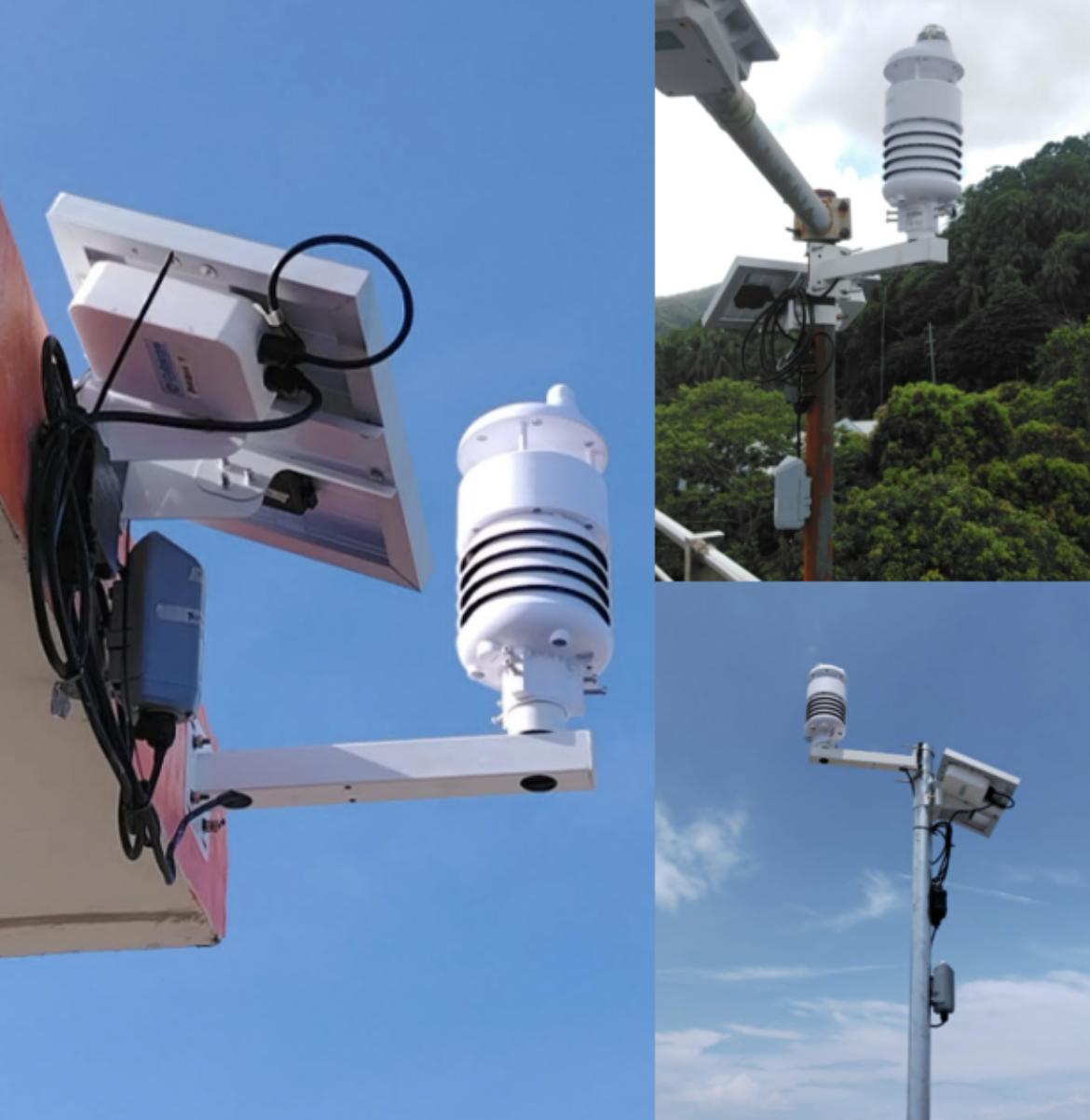
Quezon Province sits on the eastern seaboard of Luzon and takes the first hit from most systems crossing the Philippine Area of Responsibility. Local teams needed their own rainfall and wind numbers — measured at the barangay level, updated continuously — instead of relying on readings from stations tens of kilometres away. Cubicore deployed 12 LoRaWAN weather stations across the province to close that gap.
The problem
- Weather data came from distant stations that did not reflect conditions in individual municipalities
- No continuous rainfall record for flood-prone creeks and low-lying barangays
- Sites are far from mains power and have patchy mobile data coverage
- Cellular-based loggers were too costly to run across a dozen sites
What Cubicore deployed
Each site uses an all-in-one weather sensor on a pole or building edge, powered by a small solar panel with battery backup, transmitting over LoRaWAN on the AS923-3 frequency plan within the 915–918 MHz unlicensed band covered by NTC Memorandum Circular No. 03-08-2013. Gateways placed on high ground pick up the stations over several kilometres and forward readings to the platform.
- 12 solar-powered all-in-one weather stations measuring rainfall, wind speed and direction, temperature, humidity and barometric pressure
- Cubicore LoRaWAN gateways on elevated sites, each covering multiple stations
- Battery and solar-charge telemetry reported alongside the weather data
- Ruggedised mounting for coastal salt exposure and typhoon-season wind loads
The Cubicore.Cloud dashboard
All 12 stations report into one dashboard on the Cubicore.Cloud platform, with a map view of the province, per-station charts, rainfall accumulation over selectable periods, and alerts when rainfall intensity or wind speed crosses a set threshold. Data can be exported for reports or pushed onward via webhook and MQTT.
Results
- Continuous, locally measured weather data for 12 sites instead of periodic manual observation
- Early warning on heavy rainfall in the specific catchments that matter to each community
- No recurring SIM or power costs per station — solar power and LoRaWAN backhaul
- Room to add flood, water level and agricultural sensors on the same gateways
If you are planning environmental monitoring anywhere in the Philippines, email info@cubicore.io and we will come back with a coverage plan and hardware list for your sites.
Planning a LoRaWAN deployment?
Tell us where your assets are and we'll come back with a coverage plan and hardware list.
Email info@cubicore.io